
Why People With Invisible Illnesses Often Overexplain Themselves
Invisible Illnesses, Stigma and Why People Overexplain Themselves
Many people living with chronic illness find themselves constantly explaining, justifying, or defending their needs to others. They may overexplain cancellations, feel the need to justify rest, explain symptoms in detail, or try to prove that they are “sick enough” to deserve understanding, accommodations, or support.
Something as simple as cancelling plans, requesting flexibility, needing time to recover, or saying “I can’t today” can come with a long explanation meant to reassure others that they are not lazy, unreliable, dramatic, or not trying hard enough. Over time, this can become emotionally exhausting.
For many people, this pattern does not come from wanting attention or sympathy. It often develops after repeated experiences of feeling misunderstood, questioned, dismissed, or judged because of their illness.
This can be especially common for people living with invisible illnesses, where symptoms may not always be visible to others. Many people find themselves navigating invisible illness stigma while also trying to communicate their needs, advocate for themselves, and manage the emotional impact of not always feeling believed or understood.
Why Does This Happen?
Many people with chronic illness have had experiences where they did not feel taken seriously. Some have spent years searching for answers, advocating for referrals, explaining symptoms repeatedly, or trying to convince medical professionals that something was wrong before finally receiving support or a diagnosis.
Others may have been told things like:
“But you look fine.”
“Everyone gets tired sometimes.”
“Maybe you just need to push yourself more.”
“It can’t be that bad.”
Over time, these experiences can affect the way someone communicates about their illness. When a person repeatedly feels questioned or dismissed, they may begin feeling like they need to provide extensive explanations in order to avoid judgment or disbelief.
There are many reasons why people with chronic illness may begin overexplaining themselves, including:
fear of not being believed
previous dismissal or invalidation
invisible or fluctuating symptoms
stigma surrounding chronic illness and disability
guilt about needing support or accommodations
unpredictability of symptoms
fear of disappointing others
pressure to appear productive or capable
medical experiences where they had to advocate hard to be taken seriously
For some people, these experiences can become deeply emotionally impactful and may contribute to medical trauma, anxiety surrounding healthcare interactions, or hypervigilance about how symptoms are perceived by others.
The Emotional Impact of Constantly Explaining Yourself
Living with chronic illness already requires significant physical and emotional energy. Managing symptoms, appointments, medications, treatments, daily responsibilities, and the unpredictability of flare-ups can already feel overwhelming on its own. Constantly feeling like you also need to explain or justify yourself to other people can add another layer of emotional exhaustion.
Over time, this can contribute to:
exhaustion and emotional burnout
anxiety before asking for help or setting boundaries
hypervigilance about how symptoms are perceived
shame surrounding limitations or changing abilities
people-pleasing tendencies
difficulty saying no without guilt
fear of being viewed as dramatic, lazy, or unreliable
feeling like a burden to others
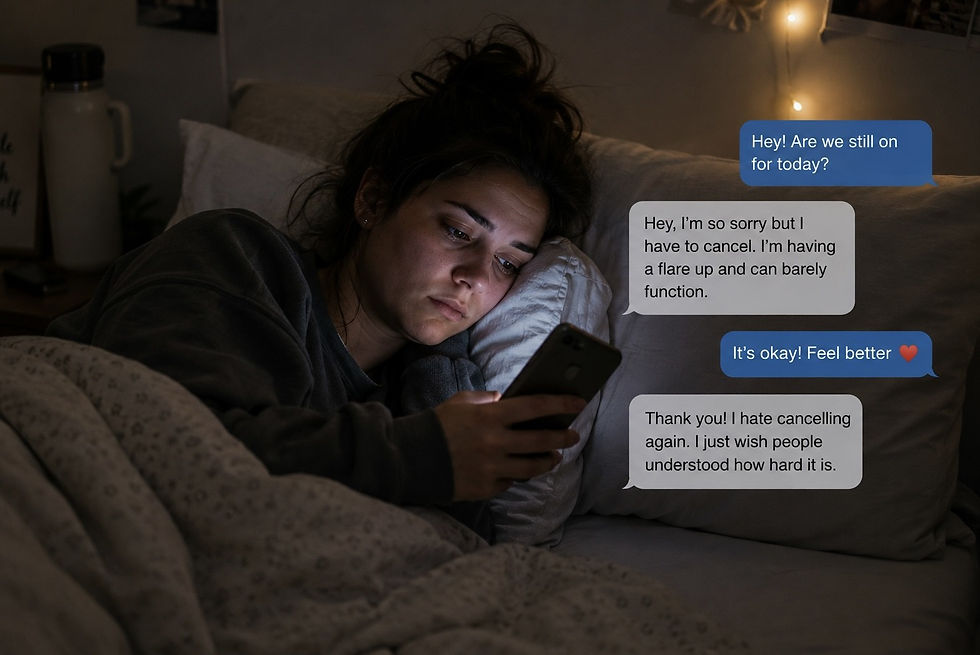
Some people may even begin questioning themselves and wondering whether they are “sick enough” to deserve support, rest, accommodations, or compassion.
You Do Not Need to Constantly Prove Yourself
Many people living with chronic illness have learned to overexplain because their experiences were repeatedly minimized, questioned, or misunderstood. While communication can sometimes be helpful, constantly feeling like you must justify your pain, exhaustion, boundaries, or limitations can take a significant emotional toll over time.
You do not need to earn compassion by proving how much you are struggling.
You do not need to justify every cancellation.
You do not need to defend your need for rest.
You do not need to provide detailed explanations in order for your experiences to be real or valid.
Learning to trust your own experiences, recognize your limits, and set boundaries without overwhelming guilt can take time, especially after years of feeling dismissed or misunderstood.
Counselling can provide a space where your experiences are acknowledged without judgment and where you do not have to constantly prove that what you are going through is real.

